
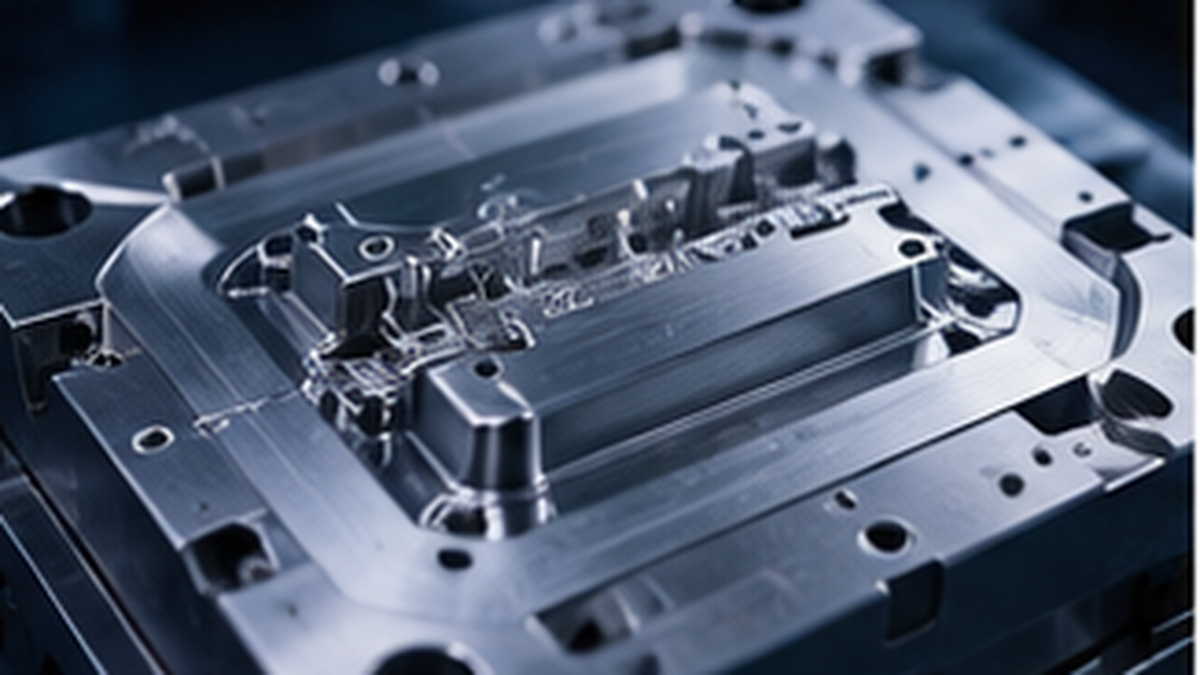
Manufacturing a plastic injection mold is not simply a matter of machining a steel block. A sound project starts by evaluating the part's function, plastic material, annual production volume, critical dimensions, surface requirements and mass-production conditions together.
Decisions made during mold design can directly affect cycle time, part quality, maintenance requirements and total production cost.
1. Reviewing Part and Project Data
The first step is to review 2D/3D drawings, a physical sample or available product data. The operating environment, material, target production quantity, critical tolerances and assembly areas are defined. This helps determine the right manufacturing approach before deciding how the mold itself will be built.
2. Mold Design
Depending on part geometry, the cavity and core structure, parting line, runner and gate locations, ejector system, cooling channels and any required moving mechanisms are planned. The objective is not only to release the part from the mold, but to produce it repeatedly and consistently in mass production.
3. Mold Material and Manufacturing Plan
Mold material selection should consider target shot quantity, plastic material, part geometry, surface requirements and expected mold life. Higher production volumes or abrasive materials may require different mold materials or surface treatments.
4. CNC Machining and EDM
Mold plates, cavities and cores are machined according to design data. Depending on geometry, 3-axis and 5-axis CNC machining, milling and electrical discharge machining may be used. Machining accuracy is important for mold closing, dimensional stability and surface quality.
5. Assembly and Mold Fitting
Machined mold components are assembled. Guiding systems, ejectors, moving components, cooling connections and mold closing are checked. The goal is not merely to make the mold operate mechanically, but to prepare it for safe and repeatable production on the injection molding machine.
6. Sample Molding and Inspection
During the first sampling stage, filling behavior, flash, sink marks, warpage, weld lines, surface appearance and critical dimensions are evaluated. Where required, corrections are made to the mold or process. Sample approval is a key control point before moving the mold into mass production.
7. Moving into Mass Production
Once sample acceptance criteria are met, the mold is prepared for planned injection molding production. To maintain part quality in series production, mold maintenance, process monitoring and periodic inspections are important.
From Mold to Mass Production at İdeal Plastik
İdeal Plastik manages plastic injection mold projects within one production chain, from design evaluation and mold manufacturing to sample molding and series part production. Its mold-manufacturing infrastructure includes 3-axis and 5-axis CNC machining, milling and EDM, while each project is evaluated together with its mass-production requirements.
Conclusion
A successful plastic injection mold is more than a tool that creates a part's geometry. Correct design, accurate machining and proper sample validation are decisive for quality and repeatability in mass production.
Read about injection mold components and tooling cost, or contact İdeal Plastik for technical evaluation and production planning.