
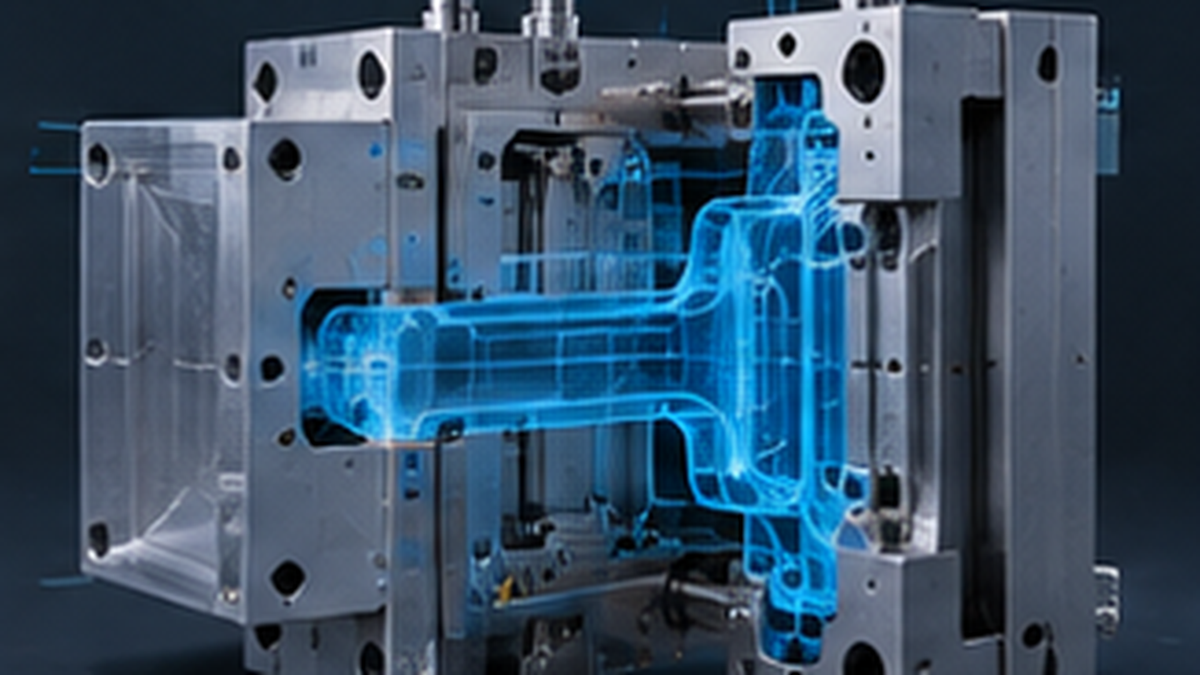
The runner system in a plastic injection mold determines how molten material travels from the machine nozzle to the cavities. In a cold runner, the channels solidify with the part and are removed at the end of the cycle. In a hot runner, heated manifolds and nozzles keep material molten within the distribution system. Both approaches can work well in the right project; the choice should not be based on mold price alone.
What Is a Cold Runner?
A cold runner uses channels without an additional system for keeping the plastic inside them molten. The runner fills along with the cavities and solidifies during cooling. Depending on the tool design, it is removed with the parts or separated by a dedicated mechanism. The runner may subsequently be separated, granulated or reused under controlled conditions where the material and product requirements allow it.
Cold Runner Advantages
Cold runner systems generally offer a lower initial tooling investment and a simpler construction. Maintenance can be easier to organize, and some projects benefit from more manageable color or material changes. These characteristics may make a cold runner economical for low or medium volumes, uncertain demand or early product development.
Cold Runner Limitations
The runner adds plastic to every shot and increases the mass that must be cooled. Separating the runner may create an additional operation. A large runner relative to part weight can influence material consumption and cost per part, especially at high annual volumes. Recovering runner material can reduce the loss, but its value must be assessed against actual quality and reuse restrictions.
What Is a Hot Runner?
A hot runner uses controlled heating in the manifold and nozzles to maintain molten material in the distribution channels. Plastic is delivered toward the cavities without solidifying throughout the runner network. Depending on the system, this can substantially reduce or eliminate the conventional solid runner removed in a cold runner process.
Hot Runner Advantages
Reducing runner material can be valuable at high production volumes, particularly when expensive engineering plastics are used. A suitable hot runner can also support automation, offer additional gate-placement options and contribute to shorter cycles in some applications. These benefits depend on the part, material and tool configuration rather than applying automatically to every mold.
Hot Runner Limitations
Manifolds, heaters, sensors and temperature-control equipment increase the initial investment and technical complexity. Fault diagnosis and maintenance can require additional expertise. Heat-sensitive resins and production plans with frequent color changes need particular attention because material remains inside a heated distribution system.
Comparing the Two Systems
Cold runners often provide a simpler and less expensive starting point. In a high-volume project, the material and cycle advantages of a hot runner may offset its additional investment over time. Compare the systems against the planned production quantity and the cost of accepted parts, not just the purchase price of the mold.
When Might a Hot Runner Be Appropriate?
A hot runner is worth evaluating when annual volume is high, runner material represents a meaningful cost relative to part weight, or a multi-cavity tool must support balanced filling and automation. It can also be relevant where a separate runner-removal operation is undesirable. The expected benefit should be supported by a project-specific process and cost comparison.
When Might a Cold Runner Be More Practical?
A cold runner may be appropriate where demand is low or uncertain, the initial tooling budget is limited, or production involves short runs and frequent changes. It may remain competitive where the runner is small and material recovery is permitted and controlled. Frequent changes are not, by themselves, a universal rule against hot runners; the actual resin, color and system design still need review.
Evaluate Total Production Cost
The comparison should include mold investment, annual quantity, part and runner weights, resin cost, cycle time, energy, maintenance and secondary operations. A more expensive mold can be economical if it lowers recurring production cost at the expected volume. At low volume, the same investment may not recover its additional cost within the project.
Assessing the Break-Even Point
A useful break-even assessment compares the additional hot runner investment with the expected savings over the planned production quantity. Runner weight, resin price, permitted regrind, cycle time and separation operations must be evaluated using realistic assumptions. Reduced runner loss and more automated handling may recover the investment in a long production program; a short or uncertain program may never reach that point.
Color and Material Changes Affect the Schedule
When the same tool runs several colors or resins, cleaning and changeover time become part of the decision. Residual material in a hot runner manifold can require additional purging and adjustment. This may have limited impact in long, single-color runs but become more important in short batches. The production schedule should therefore be reviewed alongside nominal cycle time.
Maintenance, Downtime and Multi-Cavity Balance
Heaters, thermocouples, nozzles and manifolds belong in the maintenance plan. A fault can interrupt production, so access to spare parts and service affects total ownership cost. In multi-cavity tools, material should reach the cavities under appropriately balanced conditions. Runner design, gate dimensions and process settings influence differences in part weight and dimensions between cavities.
How Does Gate Design Affect the Choice?
Edge gates, tunnel gates, pin gates and hot nozzle arrangements have different implications for gate marks, automatic separation, filling balance and appearance. A cosmetic part may benefit from a particular hot runner gate position, while a technical part may be produced effectively with a cold runner and automatic tunnel-gate separation. Runner selection should not be separated from the gate strategy and part geometry.
Heat-Sensitive Materials
Some polymers are more sensitive to high temperatures or prolonged residence time. Material retention in the manifold and nozzles, temperature distribution and stagnant regions therefore matter. Frequent interruptions or a machine-and-tool combination that gives excessive residence time can create additional concerns. The resin supplier's processing window and cleaning guidance should inform the system selection.
Checking Balance Between Cavities
Differences in runner paths, nozzles or temperature can cause some cavities to fill differently from others. The result may appear as variation in weight, dimensions or sink behavior. During trials, tracking part weight and critical dimensions by cavity gives a more useful view than relying only on overall machine settings.
Questions to Ask When Comparing Hot Runner Quotations
Clarify the manifold configuration, nozzle type, number of control zones, spare-part availability, warranty and service arrangements. Ask about resin suitability, expected color-change frequency, acceptable gate marks and access for maintenance. Simply comparing tools described as having or not having a hot runner does not establish that their technical scope is equivalent.
Energy Consumption and Cycle Time
Hot runner heaters consume energy, while a cold runner process may heat and cool additional plastic in every cycle. Comparing only installed heater power therefore gives an incomplete picture. Part weight, runner weight, machine capacity, cycle duration and total operating time should be considered together. A small change in cycle time can influence annual capacity, but its effect should be measured for the actual process.
Can Runner Material Always Be Reused?
Reintroducing granulated runner material is possible in some projects, but not under identical conditions for every resin and product. Color, mechanical performance, traceability and customer requirements may limit reuse. Reprocessing can change the behavior of glass-filled or heat-history-sensitive materials. The financial comparison should not assume that every gram of runner material retains its original value.
Frequently Asked Questions
Is a hot runner always the better option?
No. Its value depends on production volume, material, part geometry and automation goals. A cold runner can be more economical in a low-volume project.
Does a hot runner guarantee zero waste?
No. It can reduce conventional runner waste, but startup purging, process adjustment and interruptions can still generate material loss. Zero waste should not be promised for the process as a whole.
Explore injection mold construction and mold-cost assessment, then contact İdeal Plastik to evaluate a runner and tooling concept for your project.