
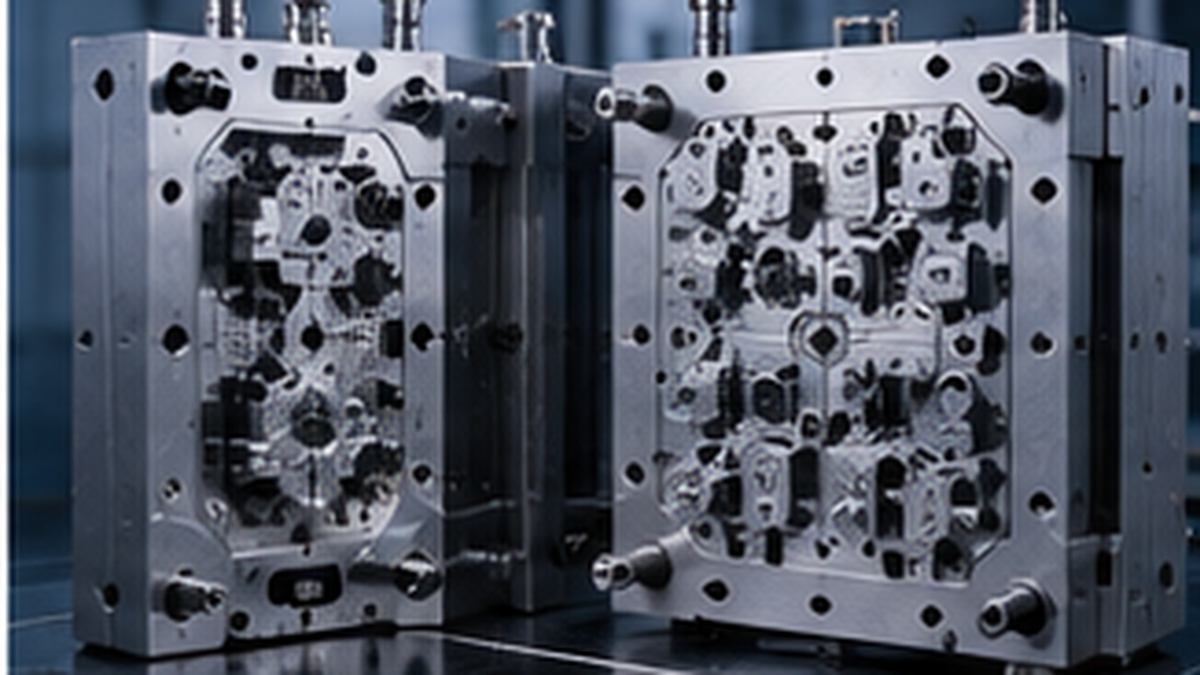
Cavity count is one of the key decisions in a plastic injection mold because it determines how many parts can be produced in each cycle.
A single-cavity mold may require a lower initial investment, while a multi-cavity mold can increase output by producing more parts per cycle. However, the correct choice cannot be made simply by assuming that more cavities are always better.
What Is a Cavity?
A cavity is the area in the mold that is filled with molten plastic and forms the external geometry of the part. A single-cavity mold produces one part per cycle, while a four-cavity mold can produce four parts per cycle under suitable conditions.
Target Production Volume
One of the first factors in determining cavity count is the target production quantity. For low or medium volumes, one or a small number of cavities may be sufficient. For high-volume series production, producing more parts per cycle can provide a capacity advantage.
Machine Capacity
As cavity count increases, mold size, total shot weight and required injection capacity also change. The injection molding machine must be checked for clamping force, shot capacity, tie-bar spacing and compatibility with mold dimensions.
Cycle Time and Production Capacity
More cavities allow more parts to be produced in the same cycle. However, total production capacity depends on more than cavity count alone. Cooling time, part geometry, plastic material properties and flow balance inside the mold also affect cycle time.
Runner and Flow Balance
In multi-cavity molds, molten plastic must reach all cavities in a balanced manner. Unbalanced filling can lead to dimensional differences, short shots or quality variation from cavity to cavity. Runner design and gate locations must therefore be planned together with cavity count.
Initial Investment and Part Cost
A higher cavity count generally means a more complex and more expensive mold. At high production volumes, producing more parts in each cycle may reduce production cost per part and improve the economics of the tooling investment. The decision should consider the actual total tooling cost and annual production target together.
Single-Cavity or Multi-Cavity?
There is no universal answer. Part geometry, target quantity, machine capacity, plastic material, quality expectations, cycle time and investment budget must be evaluated together.
Cavity Decisions at İdeal Plastik
At İdeal Plastik, cavity count is evaluated together with part geometry, production target, machine conditions and series-production requirements. The objective is not to maximize cavity count, but to define a mold structure that matches the actual production target.
Conclusion
Cavity count directly affects mold cost, mold size, production capacity and cost per part. The right decision requires annual volume, machine capacity, cycle time and part geometry to be considered together.
Review our mold-cost guide alongside runner-system requirements, then share your part data and annual volume with İdeal Plastik for a technical evaluation.